


How To Create AI-Friendly Content That Gets Featured In Search Answers
- Esther Namawanda
- Aug 4
- 7 min read


For years, businesses focused on one major goal: getting their website to rank on the first page of Google. Higher rankings meant more clicks, more visitors, and more opportunities to convert customers. But search is changing.
Today, people are no longer relying only on traditional search results. They are asking questions directly to AI-powered search tools like Google AI Overviews, ChatGPT Search, Gemini, Perplexity AI, and other answer engines.
Instead of clicking through multiple websites, users are receiving direct, conversational answers generated by artificial intelligence.
This shift has created a new challenge for businesses: How do you make sure your content is the information AI chooses to recommend? The answer lies in creating AI-friendly content.
AI-friendly content is not about writing for machines or producing endless AI-generated articles.
It is about creating helpful, trustworthy, well-structured content that artificial intelligence systems can easily understand, summarize, and recognize as valuable.
Businesses that adapt to AI search optimization today will have a major advantage tomorrow.
By combining traditional search engine optimization (SEO) with modern AI content strategies, companies can improve their AI visibility, attract more qualified traffic, and stay ahead of competitors.
In this guide, we explore how to create content that is not only loved by readers but also designed to perform well in the new era of AI-powered search.
What Is AI-Friendly Content
AI-friendly content is content created in a way that allows AI search engines to easily understand, interpret, and use the information when generating answers.
Unlike traditional SEO content, which often focuses heavily on ranking for specific keywords, AI-friendly content focuses on providing complete answers, demonstrating expertise, and solving real user problems.
For example, a traditional SEO article might focus on ranking for the keyword "best email marketing services." However, AI-friendly content would go further by explaining what email marketing services include, who needs them, what features businesses should look for, common mistakes to avoid, and how to choose the right provider.
AI systems look for content that provides context, accuracy, and value. They analyze information based on factors such as relevance, authority, trustworthiness, and how well the content answers a user's question.
This means businesses need to move beyond keyword stuffing and focus on creating genuinely useful resources.

Understand How AI Search Is Different From Traditional SEO
Traditional SEO and AI search optimization share many similarities, but the way they deliver information is different.
With traditional SEO, businesses optimize their websites to appear higher in search engine results pages (SERPs).
The focus is usually on keywords, backlinks, technical SEO, website performance, and user experience.
AI search works differently. Instead of simply displaying links, AI tools analyze multiple sources and create summarized answers based on available information.
For example, someone searching "How can small businesses improve online visibility?" may previously have received a list of websites.
Today, AI-powered search may provide a complete explanation and mention specific businesses, strategies, or resources.
This means businesses need to optimize content not only for rankings but also for AI visibility. The goal is no longer just: "How do I rank higher?"
The question has become: "How do I become a trusted source that AI systems choose when answering questions?"
Create Content That Answers Real Customer Questions
One of the most effective ways to improve your chances of appearing in AI-generated answers is to understand what your audience is actually searching for. AI search is built around questions and conversations.
People ask complete questions rather than typing only short keywords. Instead of targeting only "SEO services" Businesses should also create content around questions like:
How much do SEO services cost?
What does an SEO agency do?
How long does SEO take to produce results?
How can businesses improve Google rankings?
This approach helps businesses capture different stages of the customer journey while creating content that AI systems can easily reference.
At Linx Solutions, our content strategies focus on understanding customer intent first. We research the questions, challenges, and decisions that matter most to your audience before creating content designed to attract and convert the right visitors.
Focus On Helpful, People-First Content
Google and AI platforms are becoming increasingly better at identifying content created only to manipulate rankings. Successful content must prioritize the reader.
This means your articles should:
Explain concepts clearly
Provide practical solutions
Include real examples
Answer follow-up questions
Share expert knowledge
Avoid unnecessary repetition
For example, a blog explaining technical SEO should not simply define the term. It should explain why technical SEO matters, common mistakes businesses make, how to fix problems, and when professional help may be needed.
Helpful content builds trust with readers and sends stronger quality signals to search engines and AI systems. The best-performing content is not created just to rank, it is created to genuinely help.

Build Topical Authority Through Comprehensive Content
AI systems prefer information from sources that demonstrate expertise. One way to establish credibility is by building topical authority.
Topical authority means becoming a trusted resource around a specific subject. Instead of publishing random articles, businesses should create connected content covering different aspects of their industry.
For example, a digital marketing agency could create content around:
SEO strategies
Technical SEO
AI search optimization
Content marketing
Website optimization
Lead generation
Email marketing
Each article supports the others through internal links, creating a strong knowledge network. This helps search engines and AI platforms understand what your business specializes in and increases your chances of being recognized as an authoritative source.
Structure Your Content So AI Can Understand It Easily
AI systems need to process information quickly. Poorly structured content makes it harder for them to identify important information. A strong AI-friendly content structure includes:
Clear Headings
Use descriptive headings that clearly explain each section. This helps both readers and AI understand the topic flow.
Short, Informative Paragraphs
Large blocks of text can make information difficult to process. Short paragraphs improve readability and comprehension.
Direct Answers
When answering questions, provide clear explanations near the beginning of sections.
Lists And Tables
Organized information is easier for AI systems to interpret and summarize.
Frequently Asked Questions
FAQ sections are especially valuable because they match the conversational nature of AI search. A well-structured article improves both user experience and search visibility.
Optimize Content With Semantic SEO
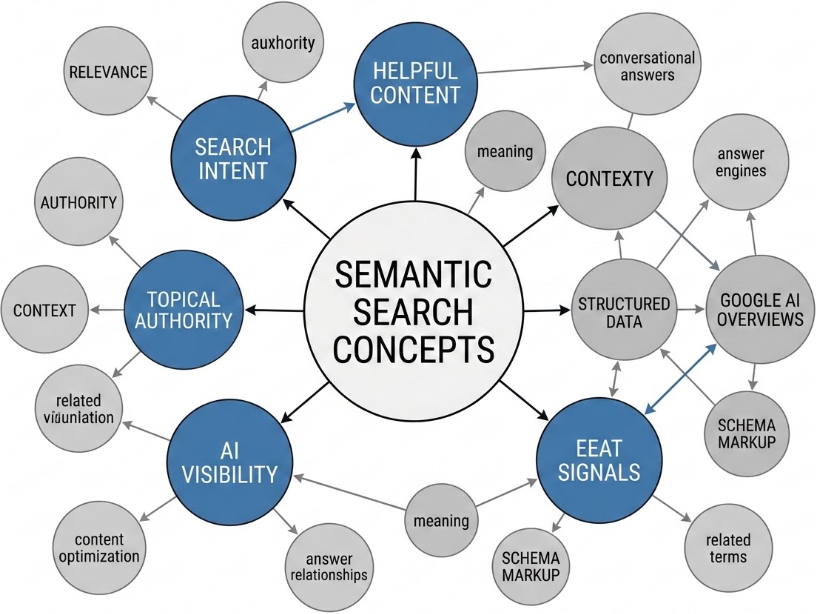
Modern SEO is no longer just about repeating keywords. Search engines and AI platforms now understand topics through context and relationships between words. This is where semantic SEO becomes important.
For example, an article about "AI SEO" should naturally include related concepts such as:
AI search optimization
Google AI Overviews
search intent
content optimization
AI visibility
answer engines
structured data
helpful content
These supporting terms help AI understand the complete meaning of your content. Semantic SEO allows businesses to create deeper, more valuable resources instead of focusing only on one keyword.
Strengthen Your Content With EEAT Signals
AI platforms prioritize trustworthy information, making EEAT (Experience, Expertise, Authoritativeness, and Trustworthiness) more important than ever. Businesses can strengthen EEAT by:
Showing real industry experience
Including expert opinions
Sharing case studies
Adding author information
Providing accurate information
Updating outdated content
For example, a marketing agency explaining SEO strategies can build credibility by sharing examples of campaigns, results, and lessons learned.
AI systems want reliable information. Demonstrating real expertise increases the chances that your content will be trusted and referenced.
Use Structured Data To Help AI Understand Your Website
Structured data helps search engines understand the meaning of your content. Using schema markup, businesses can provide additional information about:
Services
Products
Reviews
Articles
FAQs
Organizations
Events
This additional context helps search engines categorize information more accurately and can improve how your content appears in search results.
While structured data alone will not guarantee AI visibility, it strengthens your website's overall SEO foundation.
Keep Your Content Fresh And Updated
AI systems prefer accurate and current information. Industries change quickly, especially areas like digital marketing, technology, and online search.
Content that was valuable two years ago may no longer provide the best answers today.
Regularly updating your content helps maintain:
Accuracy
Search rankings
User trust
AI visibility
Updating statistics, improving explanations, adding new examples, and refreshing outdated sections can significantly improve content performance.
A website that consistently provides current information is more likely to remain competitive in AI-powered search.

Common Mistakes That Prevent Content From Appearing In AI Search
Many businesses struggle with AI visibility because their content follows outdated SEO practices. Common mistakes include:
Writing Only For Keywords
Content created around keywords instead of users often lacks depth and value.
Publishing Generic Information
AI systems can identify repetitive content that provides little unique insight.
Ignoring Search Intent
A page may rank for a keyword but fail to answer what users actually need.
Neglecting Technical SEO
Even excellent content can struggle if a website has crawling, indexing, or performance issues.
Avoiding Human Expertise
AI values content that demonstrates real-world experience.
Avoiding these mistakes helps businesses create stronger, more competitive content.
How Linx Solutions Helps Businesses Create AI-Optimized Content
At Linx Solutions, we understand that the future of digital marketing goes beyond traditional rankings. Businesses need content strategies that work across Google Search, AI Overviews, and emerging AI-powered platforms.
Our SEO and content experts create AI-friendly content designed around search intent, user needs, and industry expertise.
We combine keyword research, semantic SEO, content optimization, technical SEO knowledge, and strategic storytelling to create content that attracts visitors and builds authority.
From blog writing and website optimization to AI search strategies, we help businesses create digital content that is valuable to customers and discoverable by modern search systems.
Our goal is simple, create content that answers questions, builds trust, improves visibility, and supports business growth.

The Future Of Search Belongs To Businesses That Create Better Answers
The way people search online is changing, but one principle remains the same: valuable content wins. Creating AI-friendly content does not mean abandoning SEO. It means improving your SEO strategy to match the future of search.
Businesses that focus on helpful content, strong expertise, semantic SEO, clear structure, and AI search optimization will have a stronger chance of being featured in search answers and reaching customers wherever they search.
The question is no longer only: "Can people find your website on Google?"
The new question is: "Will AI recommend your business when customers ask for answers?"
With the right strategy, your content can become more than a search result, it can become the trusted answer customers are looking for.
Ready to improve your AI visibility and future-proof your online presence? Contact Linx Solutions today and discover how our SEO and content experts can help your business create content built for the next generation of search.



Comments